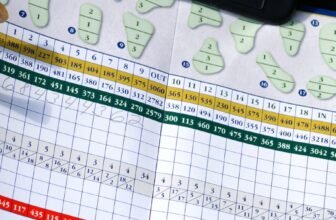

In golf, understanding terms like par, birdie, bogey, and eagle is essential for grasping the game’s scoring system. Par sets the standard, while a birdie indicates a player’s skill in going below that benchmark. On the other hand, a bogey shows where improvements can be made. Then there’s the eagle, a mark of exceptional play. Curious about how these scores impact a player’s game strategy? Let’s explore further.
Understanding Par: The Baseline of Golf Scoring
Have you ever wondered what “par” really means in golf? Par represents the number of strokes an expert golfer is expected to take to complete a hole or an entire course.
Each hole has its own par, usually ranging from three to five strokes, depending on its length and difficulty. When you see a par-three hole, you know it should take you three strokes to reach the green and complete the hole.
The total par for an 18-hole course typically hovers around 72.
Understanding par is crucial because it serves as the benchmark for evaluating your performance. If you finish with a score equal to par, you’ve played just as expected, providing a solid foundation for setting goals and improving your game.
What Is a Birdie? Scoring Below Par
After grasping the concept of par, it’s time to explore what happens when you score below it. A birdie is when you complete a hole one stroke under par.
For instance, if a hole’s par is 4, finishing it in 3 strokes earns you a birdie. This achievement showcases your skill, precision, and ability to navigate the course effectively.
Scoring a birdie can boost your confidence and momentum throughout the game. It’s a fantastic way to reduce your overall score and is often celebrated by players.
The Meaning of Bogey: Scoring Above Par
While scoring below par can feel exhilarating, understanding what it means to score above par is equally important for any golfer.
A bogey occurs when you complete a hole one stroke over par. For example, if a hole has a par of 4 and you take 5 strokes to finish, you’ve made a bogey. It’s a common term you’ll encounter on the course, and while it mightn’t feel great, it’s part of the game.
Many golfers aim to minimize bogeys to improve their overall score. Recognizing where you typically score bogeys can help you focus your practice, whether it’s improving your putting or managing your course strategy better.
Embracing the bogey can lead to better rounds.
Eagle: Achieving the Extraordinary in Golf
What makes an eagle such a coveted achievement in golf? You’re scoring two strokes under par on a hole, showcasing your skill and precision.
Achieving an eagle isn’t just about luck; it requires a combination of strategy, excellent shot-making, and sometimes a bit of boldness. Imagine sinking a long putt or hitting a perfect drive that leaves you with a manageable chip.
When you pull it off, the rush of excitement is exhilarating. Eagles are rare, making them a highlight in any round, and they can significantly boost your scorecard.
Whether it’s a par-5 or a challenging par-4, every eagle you achieve reinforces your prowess on the course and reminds you why you love the game.
Frequently Asked Questions
How Is Par Determined for Each Golf Course?
Par’s determined by a course’s length, difficulty, and layout. It typically averages the strokes an expert golfer needs to complete the course. You’ll find par values on scorecards for each hole.
Can a Golfer Score Multiple Birdies in One Round?
Yes, you can score multiple birdies in one round. It’s all about your skill and the course layout. Focus on your game, and you might just find yourself racking up those birdies!
What Is the Significance of a Double Bogey in Golf?
A double bogey signifies that you’ve scored two strokes over par on a hole. It can impact your overall score and momentum, so staying focused and positive is crucial for your game moving forward.
Are There Different Types of Eagles in Golf Scoring?
Yes, there are different types of eagles in golf scoring. An eagle typically means scoring two strokes under par on a hole, but you can also achieve a double eagle, which is three strokes under par.
How Do Weather Conditions Affect Scoring in Golf?
Weather conditions can significantly impact your golf scoring. Wind, rain, and temperature changes affect ball flight and course conditions, making it harder to predict outcomes. You’ll need to adapt your strategy based on these factors.
Conclusion
In golf, understanding par, birdies, bogeys, and eagles can enhance your appreciation of the game. These terms not only help you track your performance but also give you goals to strive for on the course. Whether you’re aiming for a birdie or trying to avoid a bogey, each shot counts. So, next time you tee off, remember these definitions and enjoy the thrill of chasing those scores as you improve your game!